
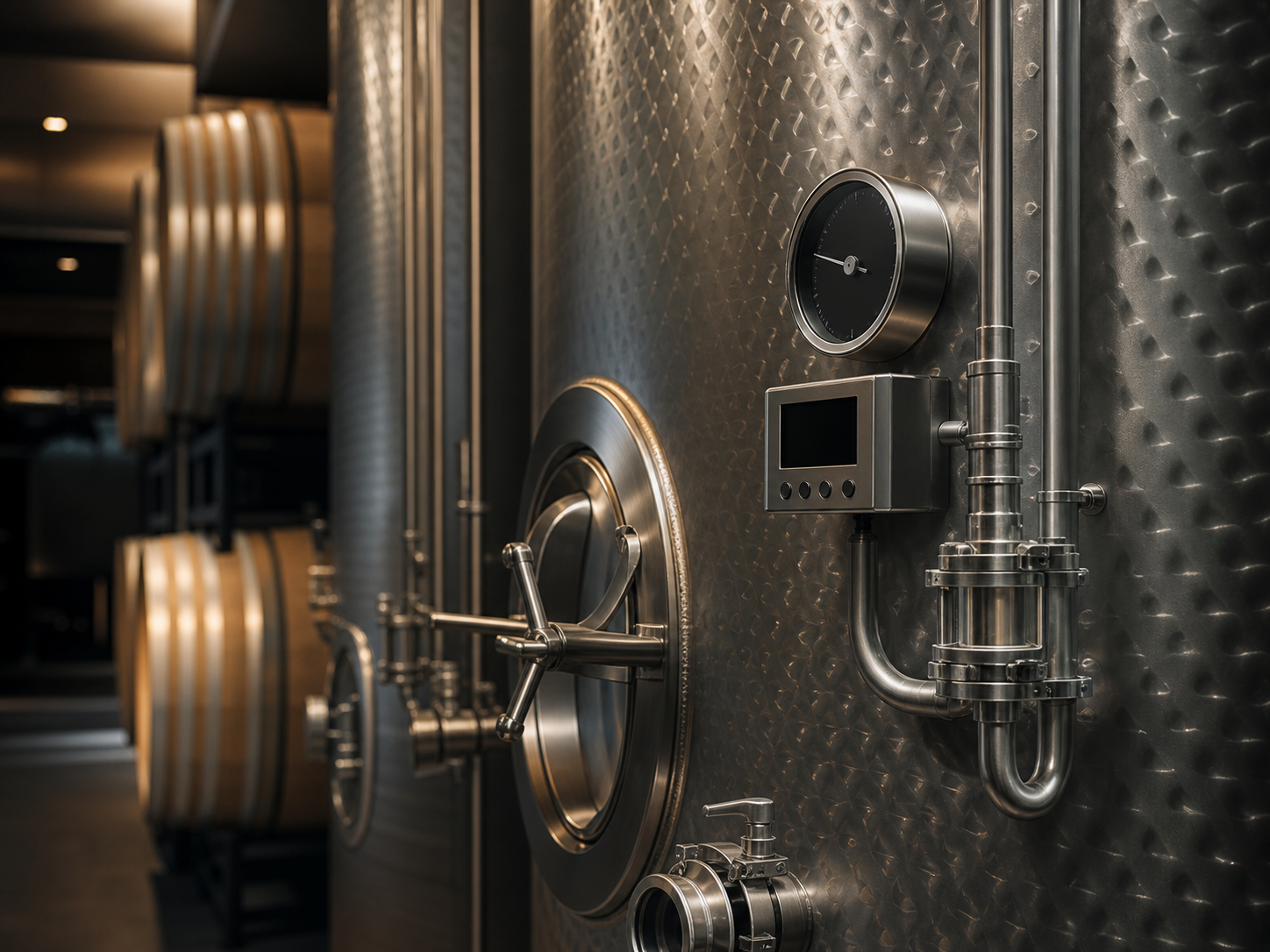
Systems
Temperature control is not just holding a number.
A setpoint does not protect the wine by itself. What matters is how the tank responds, how fast the cellar can act, and whether temperature stays connected to the real rhythm of fermentation and holding.
The real pressure
The problem is not temperature. It is temperature at the wrong moment.
Temperature behavior is rarely isolated from the work around it. Lag, recovery speed, waiting time, cleaning windows, and transfer rhythm all shape whether the wine stays inside the condition the winemaker intended.
For the winemaker, the question is whether the next reading can still be trusted. For the owner or general manager, the same pressure becomes quality risk, energy load, labor timing, and production confidence.
Fermentation response
The number looks right. The wine is still waiting for the response.
A displayed setpoint can look reassuring while the tank is still catching up. If response time, tank role, or fermentation sensitivity are out of rhythm, the number arrives too late to protect the decision.
Holding and timing
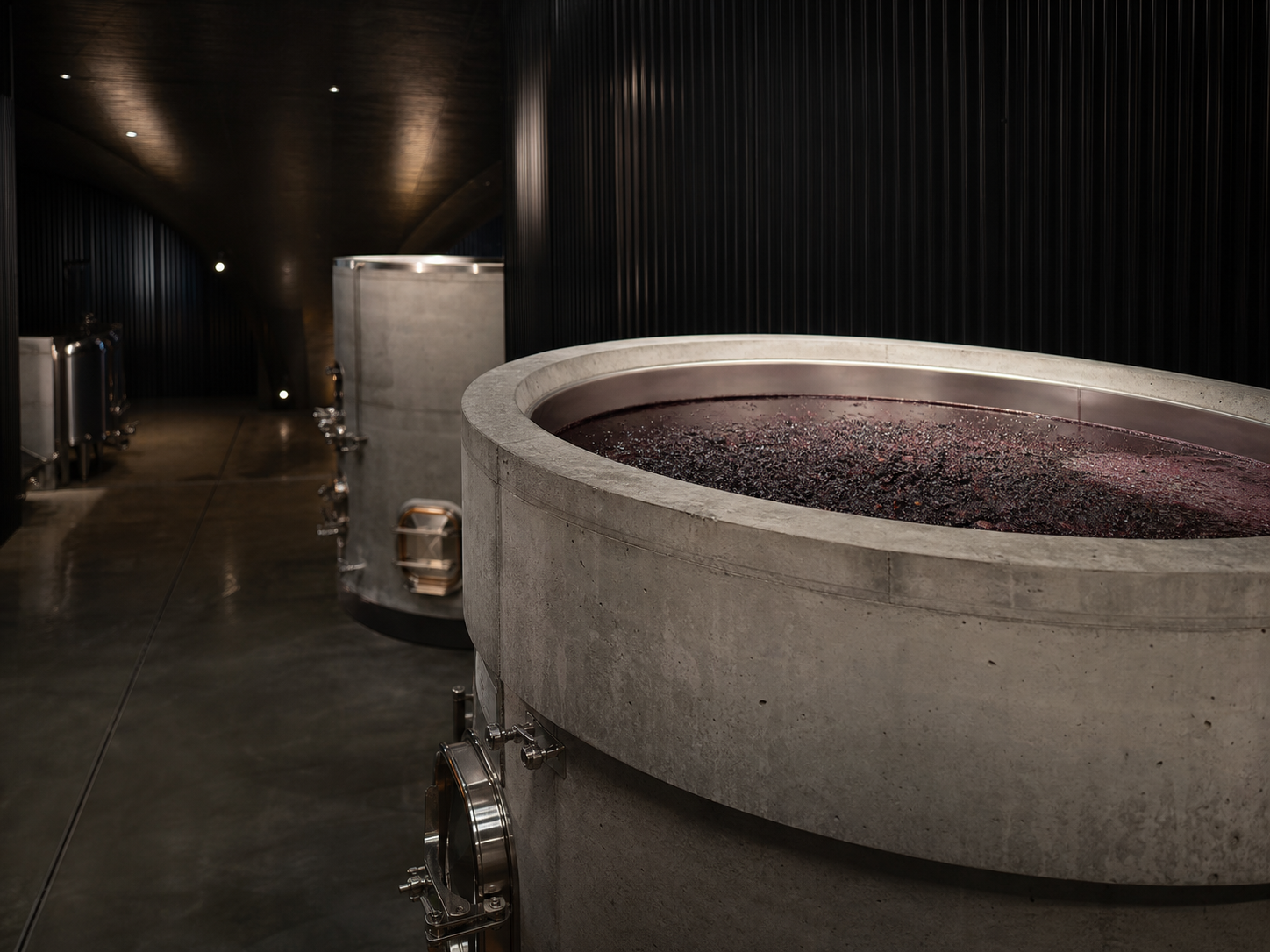
Some lots do not need more control. They need fewer surprises.
Waiting time can still change the wine. Holding, transfer timing, cleaning delays, and cellar availability can all create condition drift when temperature behavior is treated as a separate technical layer.
Cellar load
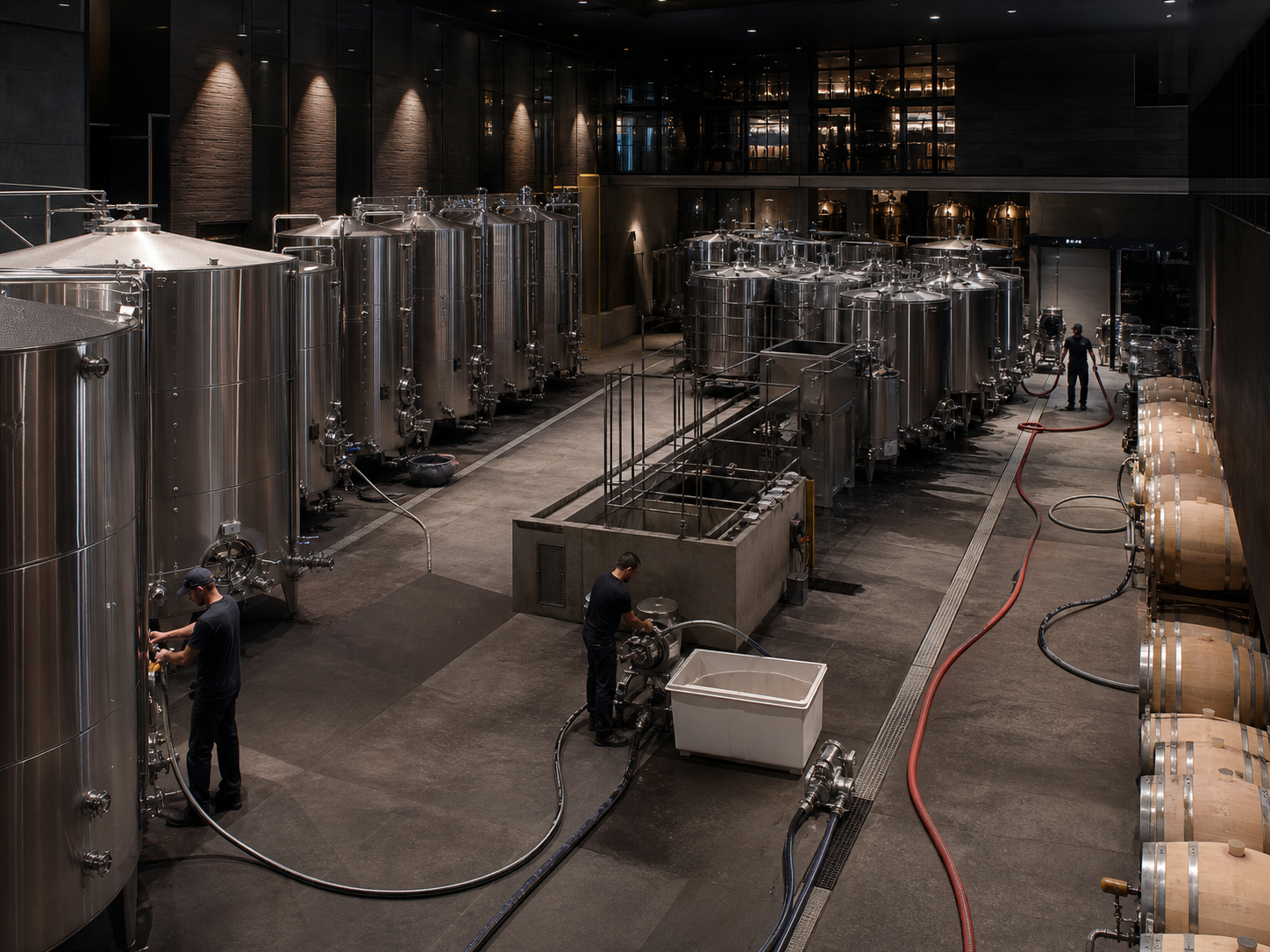
When the cellar gets busy, temperature becomes part of the workflow.
Under harvest load, temperature cannot sit apart from the rest of the cellar. Multiple tanks, cleaning cycles, transfers, and operator movement all affect when the system has to respond.
The decision
A thermal control system is the condition around the tank, not only the control point.
The point is not to add more control for its own sake. It is to connect temperature response, holding stability, cellar rhythm, and wine sensitivity so equipment can support the moment when condition actually matters.
Equipment role
Where temperature behavior becomes equipment roles.
Thermal-controlled equipment carries response, stability, insulation, cooling interface, and cellar timing into physical form.