
Systems
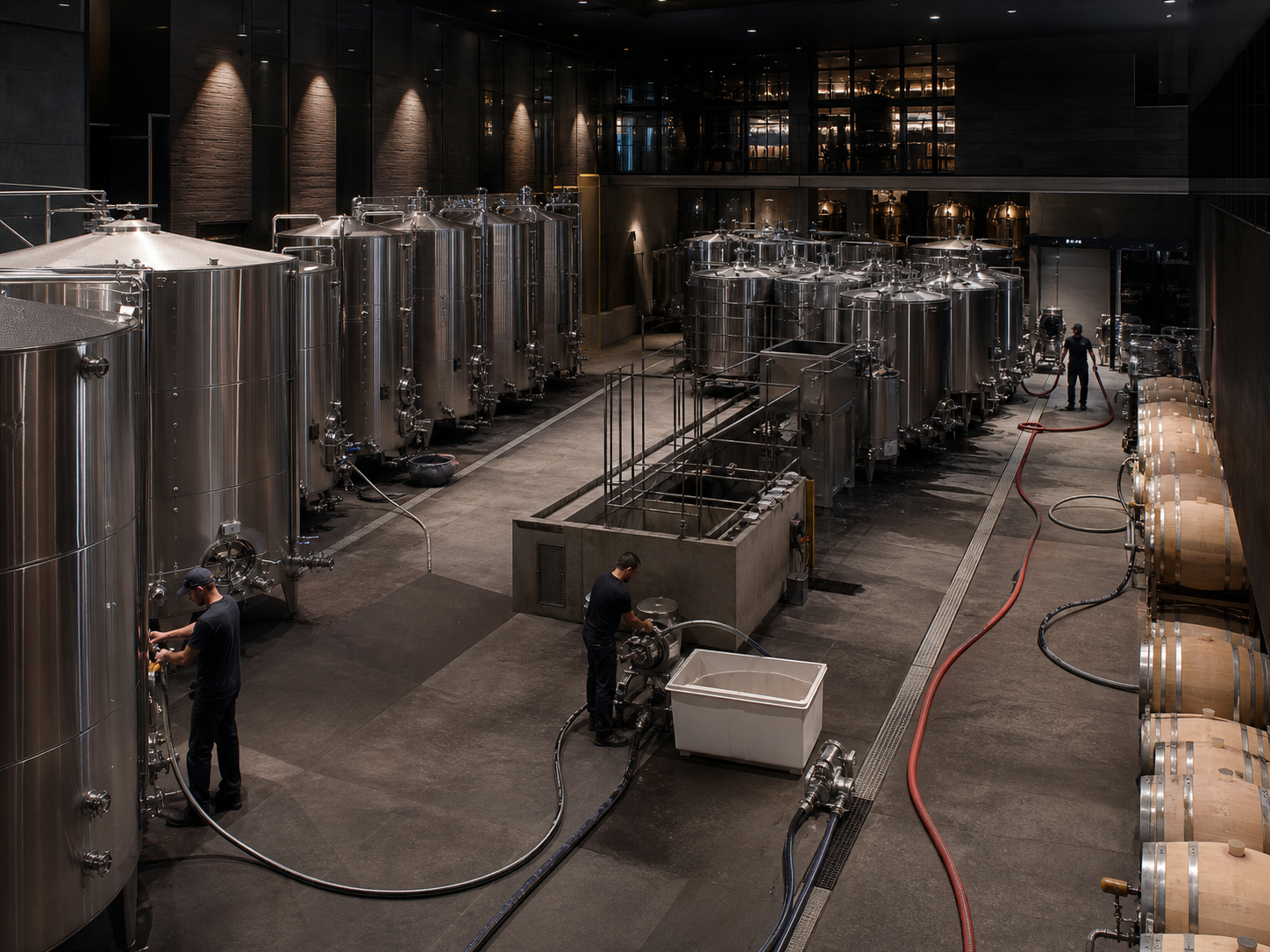
Movement should make the cellar clearer, not busier.
Transfer is not a side task when the cellar is under pressure. It is where wine, people, cleaning, access, and timing either stay readable or start creating hidden friction.
The real pressure
The problem is not moving wine. It is what movement interrupts.
A transfer can look like a simple operation until it blocks cleaning, changes timing, occupies the same route as people, or leaves the next tank waiting.
For the winemaker, process friction becomes disturbance after the decision has already been made. For the owner, it becomes labor, waiting time, bottleneck risk, and a cellar that feels harder to run than it should.
Harvest movement
At harvest, every path starts asking for the same space.
Fruit, wine, hoses, pumps, cleaning, and people can all arrive in the same narrow window. The useful question is whether movement keeps the next decision clear or simply pushes pressure somewhere else.
Handoffs and cleaning
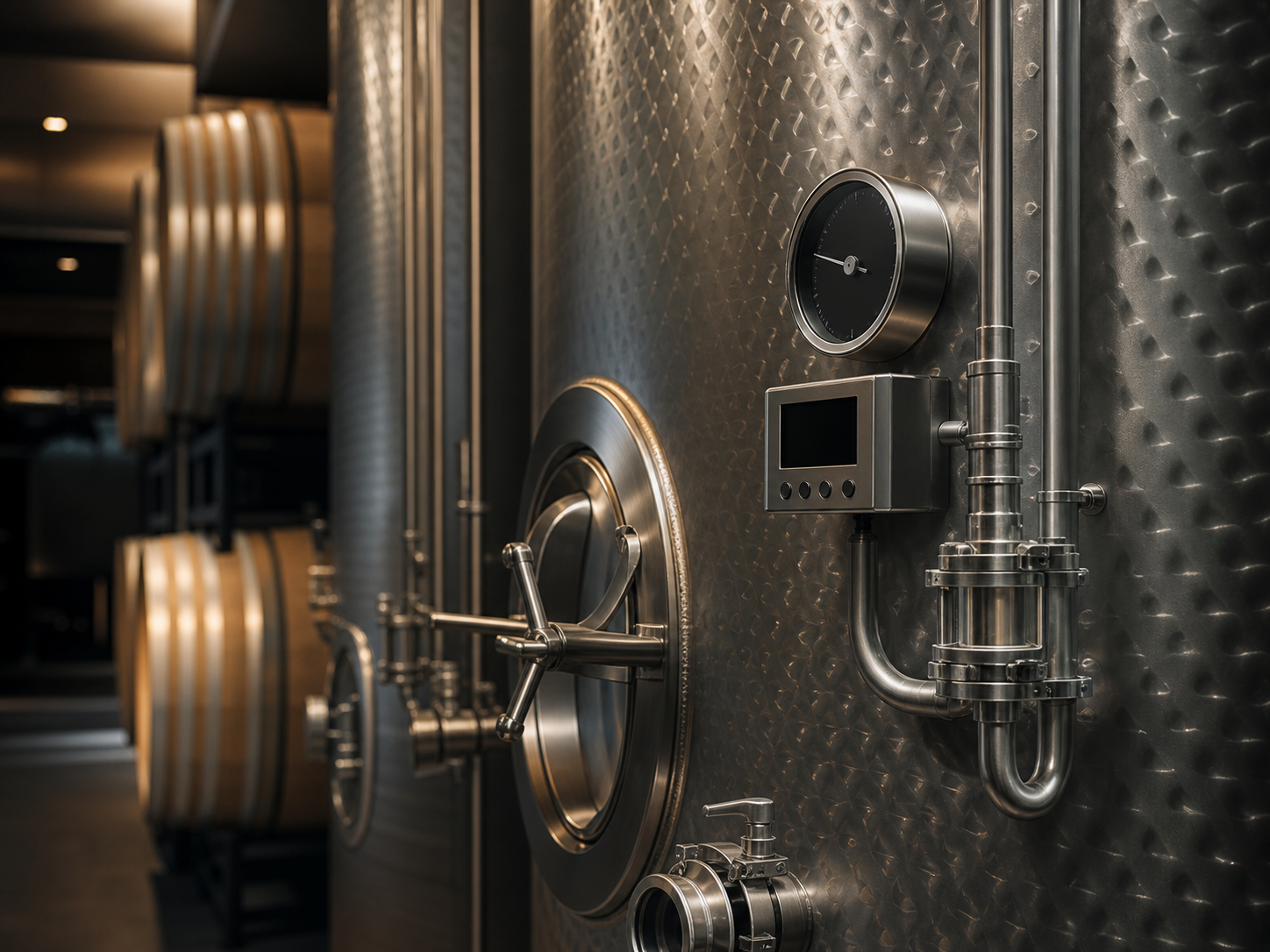
Every handoff can either protect the wine or add noise.
A careful fermentation can still be disturbed by waiting, connection changes, cleaning conflict, pump setup, or a handoff that happens in the wrong order.
Operating load
When the cellar is busy, transfer becomes a planning problem.
The pressure is not only whether the wine can be moved. It is whether the move can happen without blocking fermentation checks, holding windows, cleaning, or the next lot.
The decision
A process system is the discipline between steps.
The point is not to add more movement hardware. It is to make transfer, cleaning, access, and timing easier to read so the cellar can change tasks without disturbing the work already done.
Equipment role
Where movement pressure becomes equipment roles.
Process and transfer equipment carries routes, interfaces, cleaning access, and operator movement into physical cellar infrastructure.