
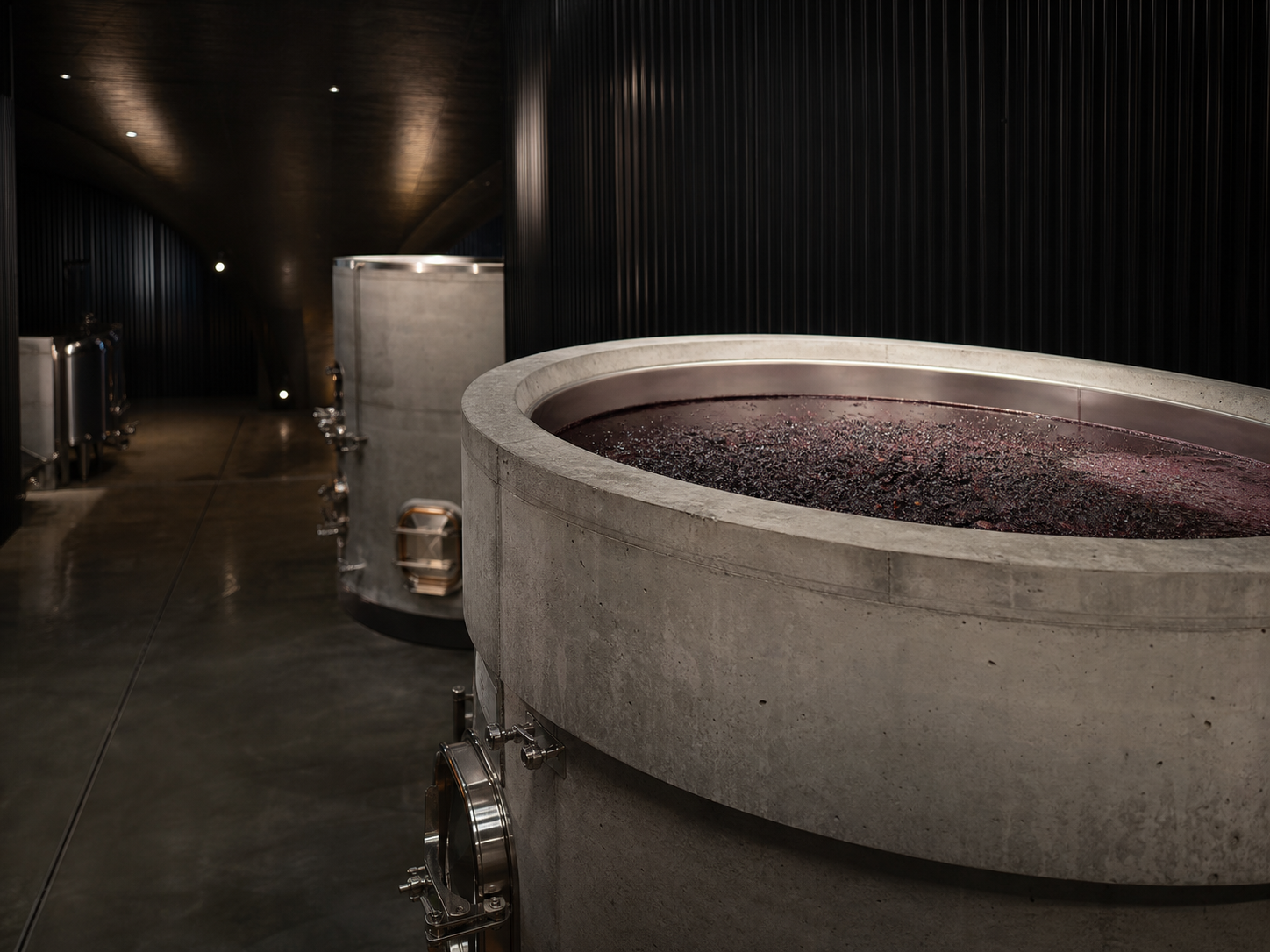
Systems
Fermentation should stay readable while there is still time to act.
The question is not only what the tank can hold. It is whether the cellar lets the winemaker see, reach, cool, clean, and respond while the decision still matters.
The real pressure
The tank is only the visible part of the fermentation decision.
During active fermentation, the important signals are practical: what can be seen, what can be reached, how fast the team can respond, and whether cleaning or transfer will disturb the next step.
When those conditions are unclear, the winemaker is forced to compensate. The owner feels it later as labor pressure, bottlenecks, and equipment that looks capable but does not make the cellar easier to run.
Active fermentation
Fermentation only stays useful when it can still be read.
A tank can look calm from a distance while the real question remains close to the surface: can the winemaker still understand what is happening before a small change becomes tomorrow's correction?
Access and cleaning
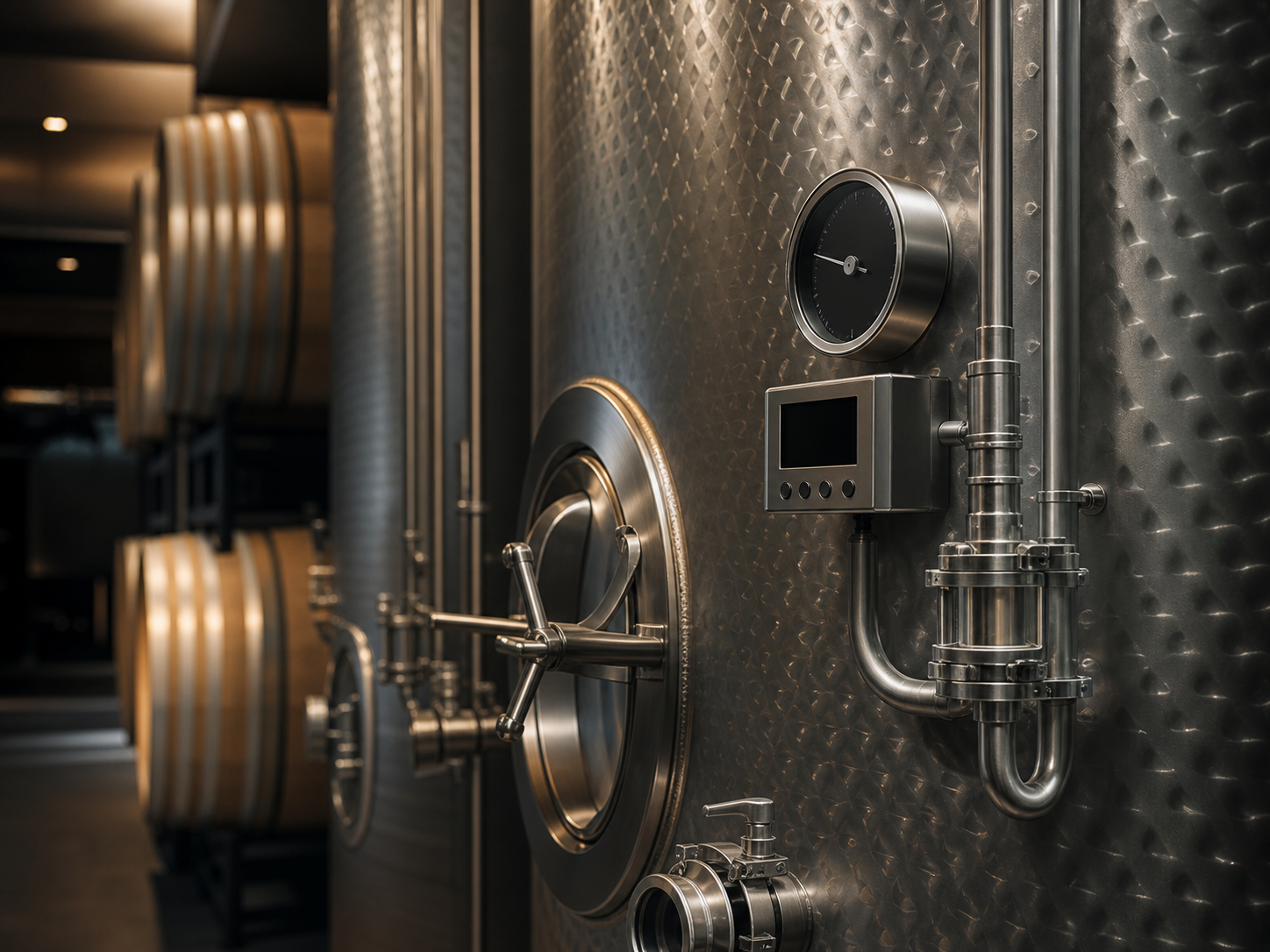
The team should not have to choose between good judgement and workable access.
Fermentation work is not only observation. It includes reaching the right point, cleaning without blocking the next task, managing temperature connections, and preparing the tank for the next movement.
Harvest pressure
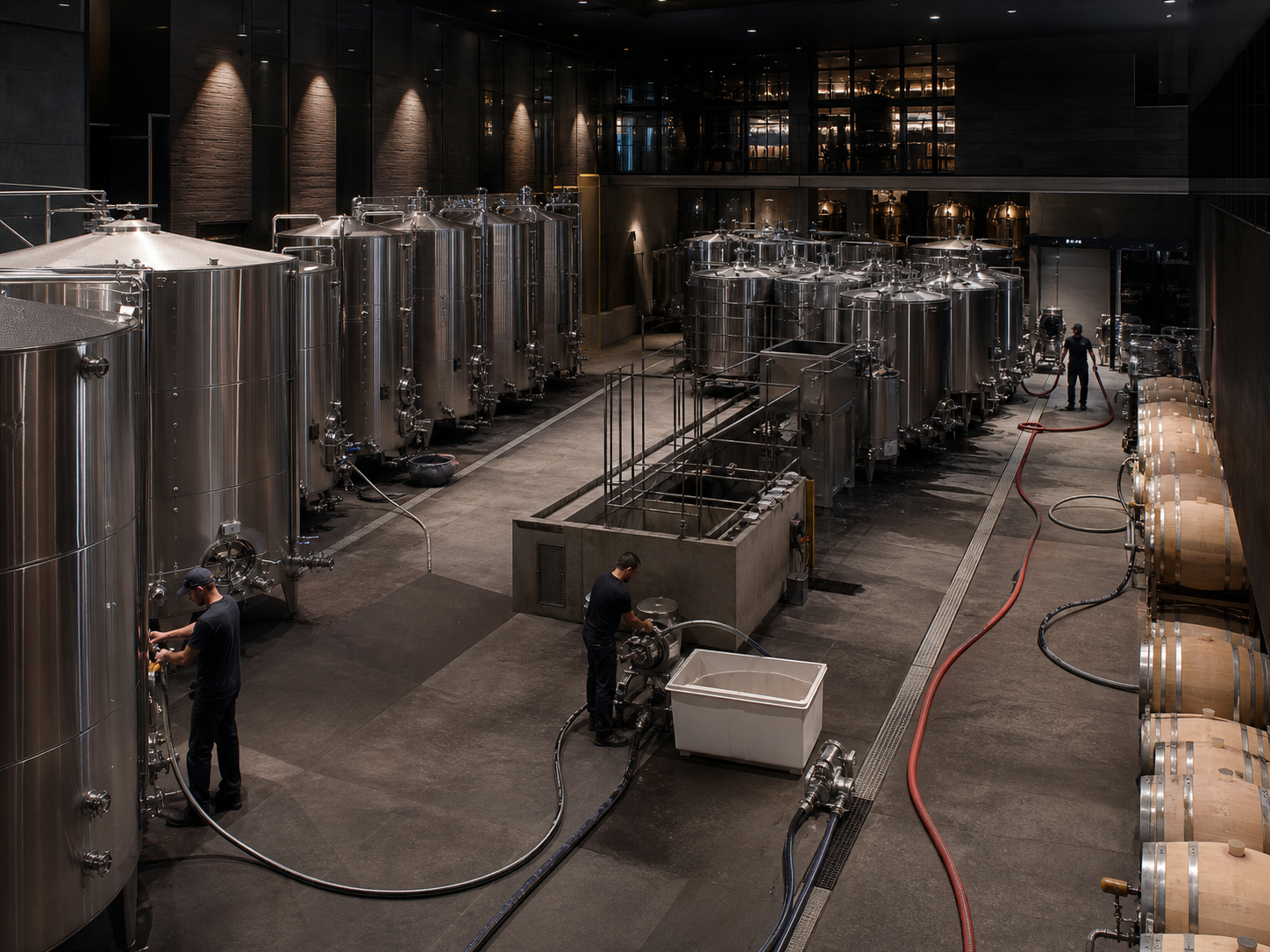
Under load, small friction becomes a fermentation problem.
When several tanks are active at once, the cellar has to keep attention, movement, cooling, cleaning, and transfer from competing for the same narrow window.
The decision
A fermentation system is the working condition around the tank.
The point is not to make fermentation more complicated. It is to make the important conditions easier to see, reach, clean, cool, and move through, so equipment can be chosen for the job it actually has to carry.
Equipment role
Where these pressures become equipment roles.
The equipment role is not just a fermentation tank. It carries readability, access, cleaning, temperature interface, and transfer readiness into physical form.