
01
Keep every lot its own
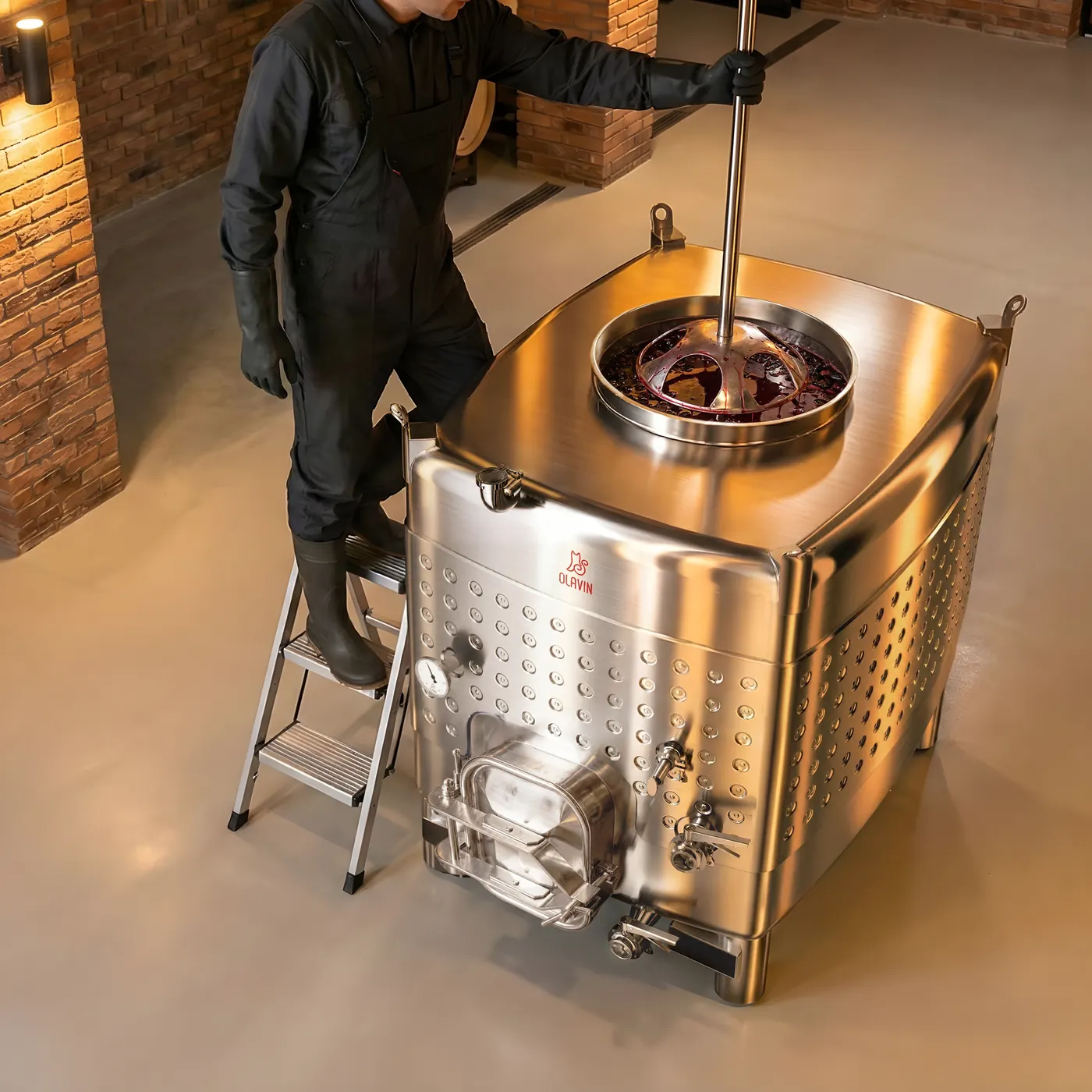
Fermenting, cold-stabilizing, and aging in dedicated small tanks keeps every lot's identity intact — no forced blending to fill a tank, no compromises on trial work.
Product Code: L
Keep every lot its own.Do it with one piece of equipment.
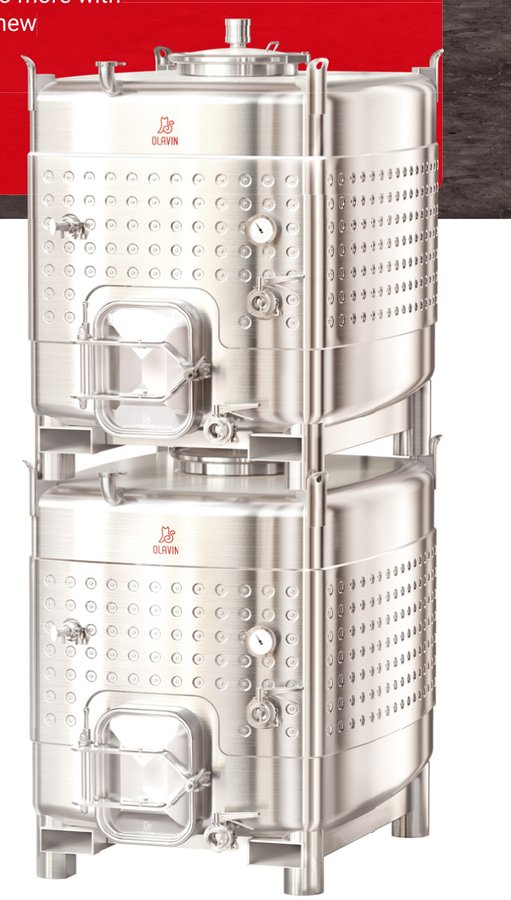
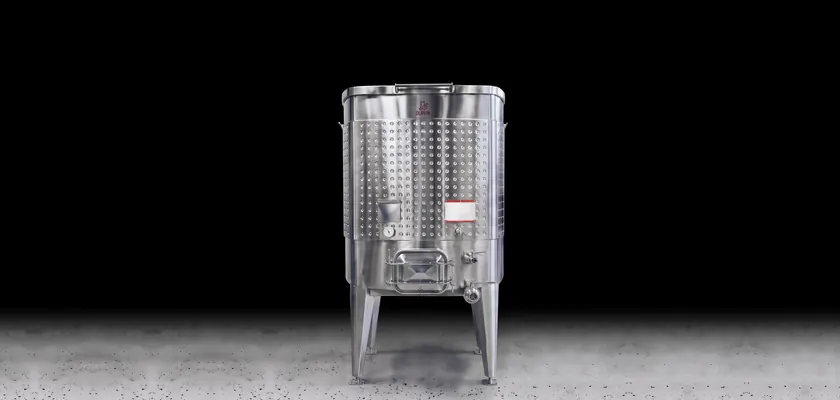
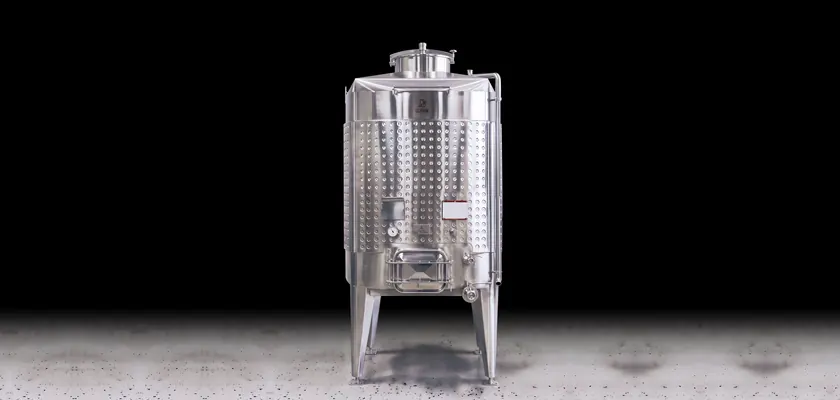
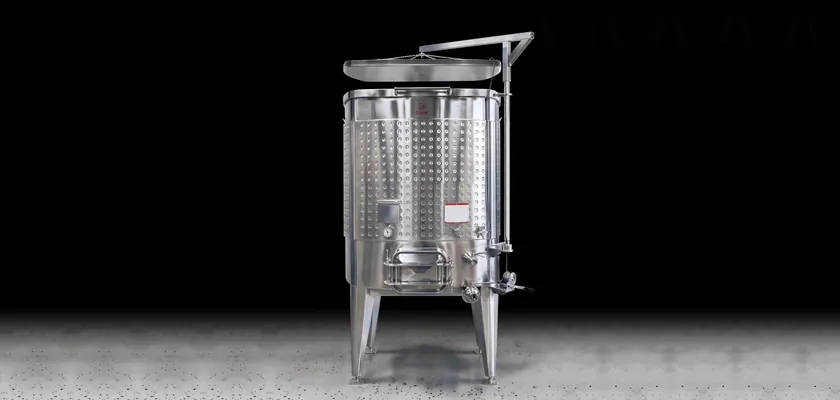
A jacketed 1.0–2.2 kL square tank that ferments, cold-stabilizes, ages, moves, travels and stacks — planned around how small your lots really are, and how often the cellar has to be rearranged around them.
Think Small, Ferment Smart.
Why this tank
An Olavin Mini Tanker is not chosen because it is small. It is chosen when a program has fragmented into lots worth keeping apart — single vineyards, trial ferments, separate blocks, experiments — and below 2.5 kL the cellar is being asked to own seven pieces of equipment to do seven jobs.
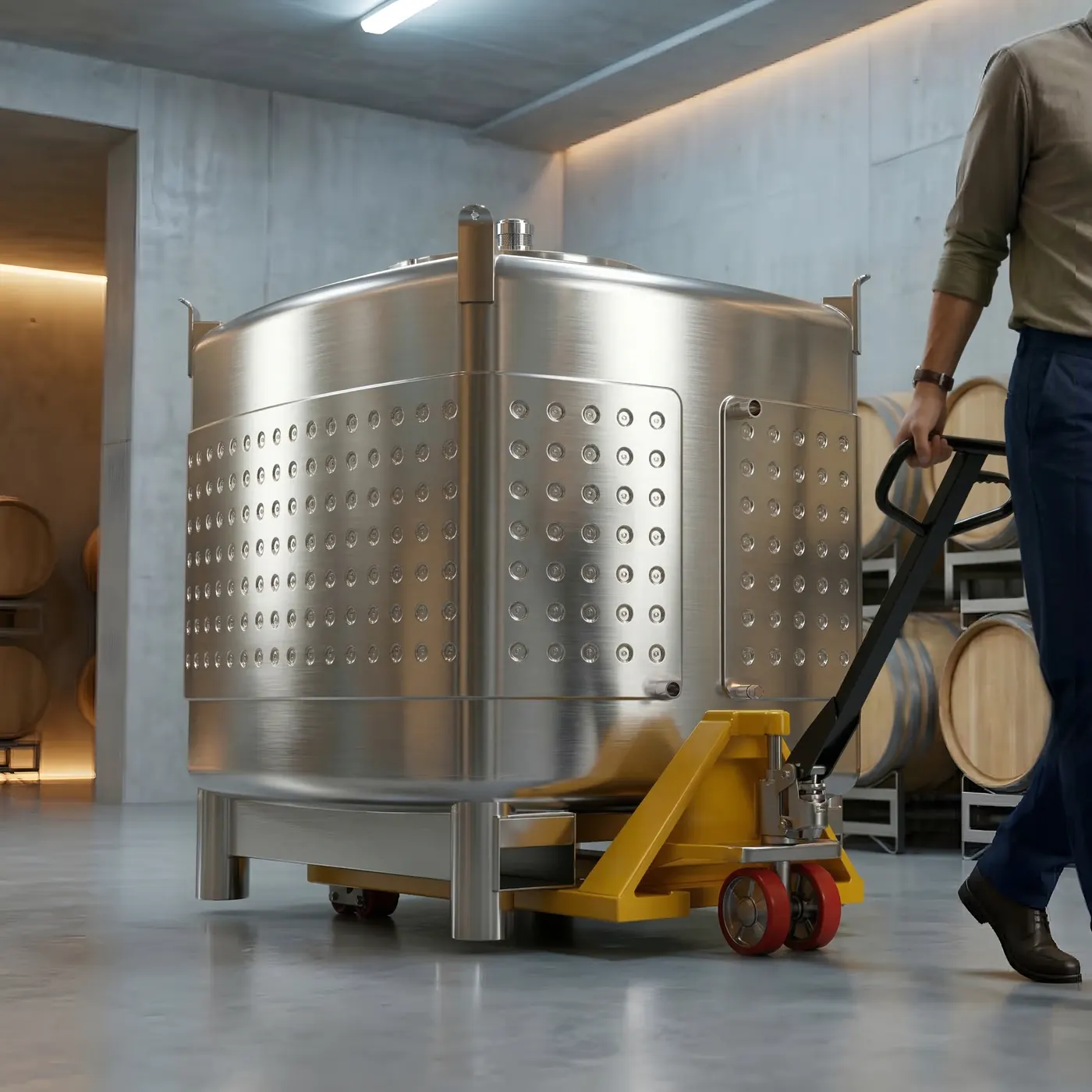
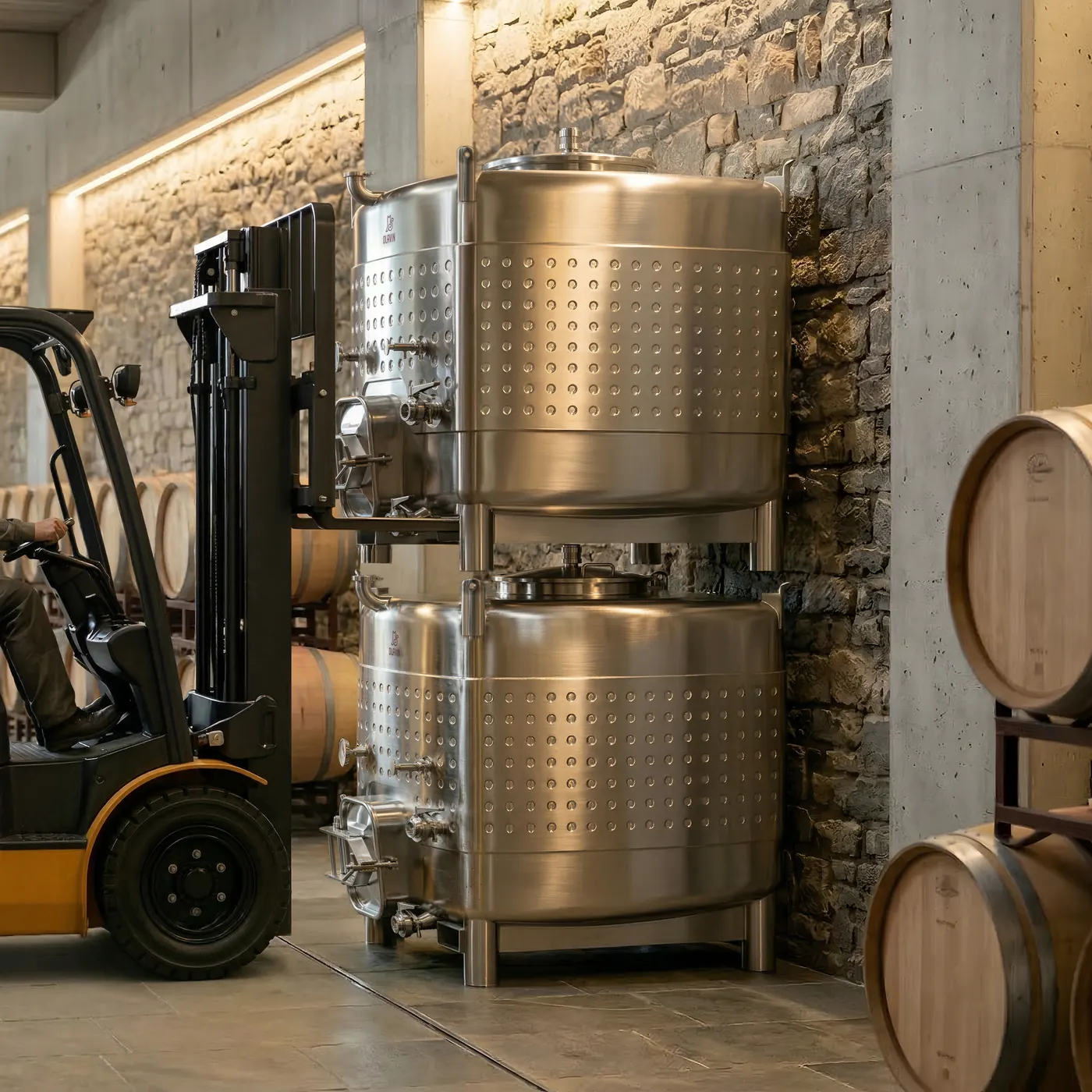
For the wine, that means no lot is blended just to fill a tank: fermentation, cold stabilization and aging all happen in a dedicated tank at full standard, with a full size jacket and SS316 at the top entry. Not a specialist, and not a tote pressed into winemaking. For the cellar, the floor plan stops being fixed — tanks move on a pallet jack from any of four sides, stack three high when the floor gets tight, and ride a trailer when the wine has to leave the building.
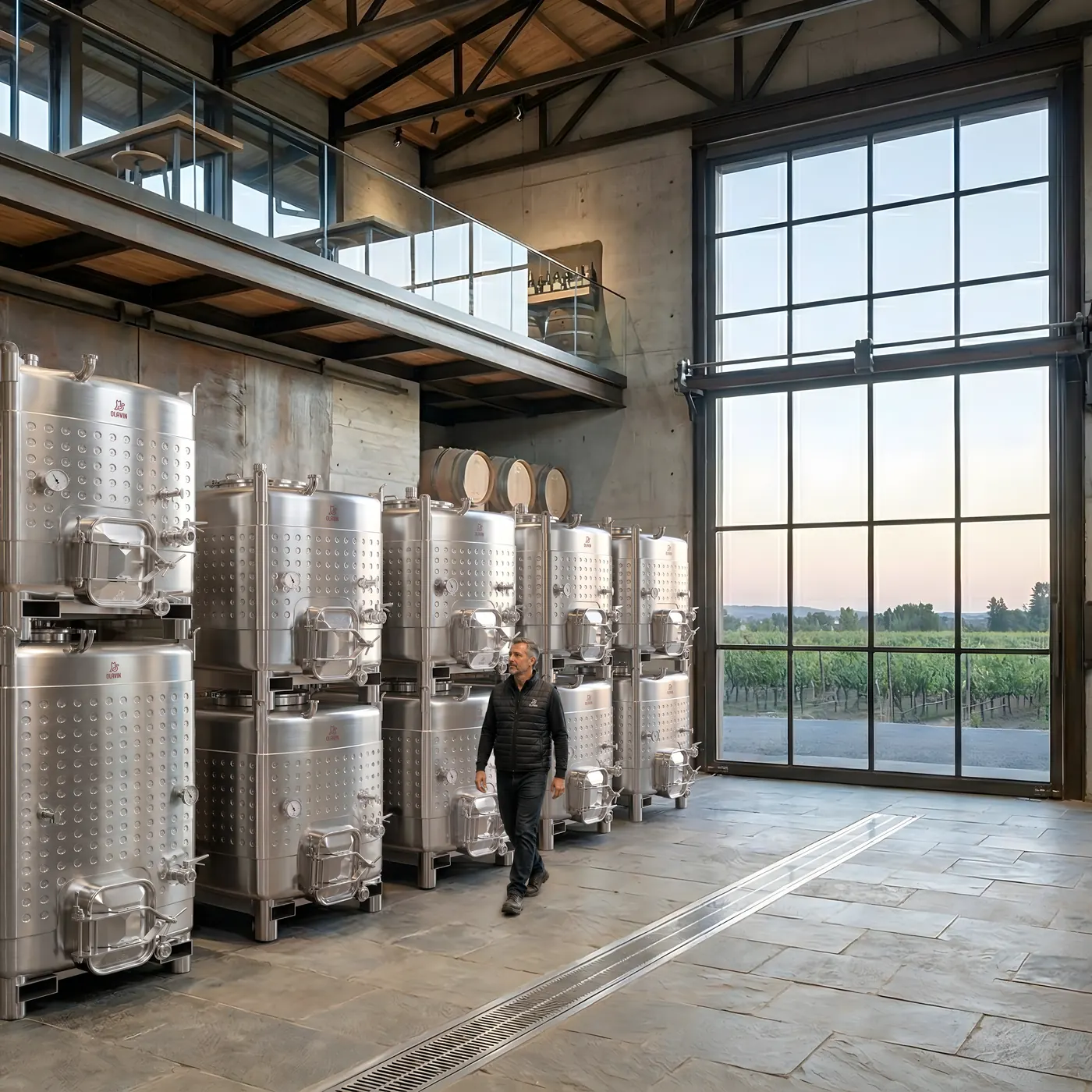
The planning stays simple because the footprint does not change. Every size shares the same position on the floor; capacity comes from height, so one grid covers whatever mix of sizes the program lands on. Think small, ferment smart.
01
Fermenting, cold-stabilizing, and aging in dedicated small tanks keeps every lot's identity intact — no forced blending to fill a tank, no compromises on trial work.
02
Crush layout, fermentation layout, and storage layout no longer have to be the same floor plan. Tanks move to where the season needs them — or stack when the floor gets tight.
03
A lot can ferment at the winery, ride to a partner facility on a pickup or trailer, and come back — without ever leaving its own tank.
How Olavin designs
Olavin does not treat small-lot equipment as production gear scaled down, or as a tote pressed into winemaking. We begin with the jobs a small lot actually needs, how the tank has to move, what happens when the floor runs out, and how the cellar is planned around it. Those decisions shape the format.
Specifications
Sizing, materials, and configuration are finalized around the cellar: access, cleaning, temperature control, and layout.
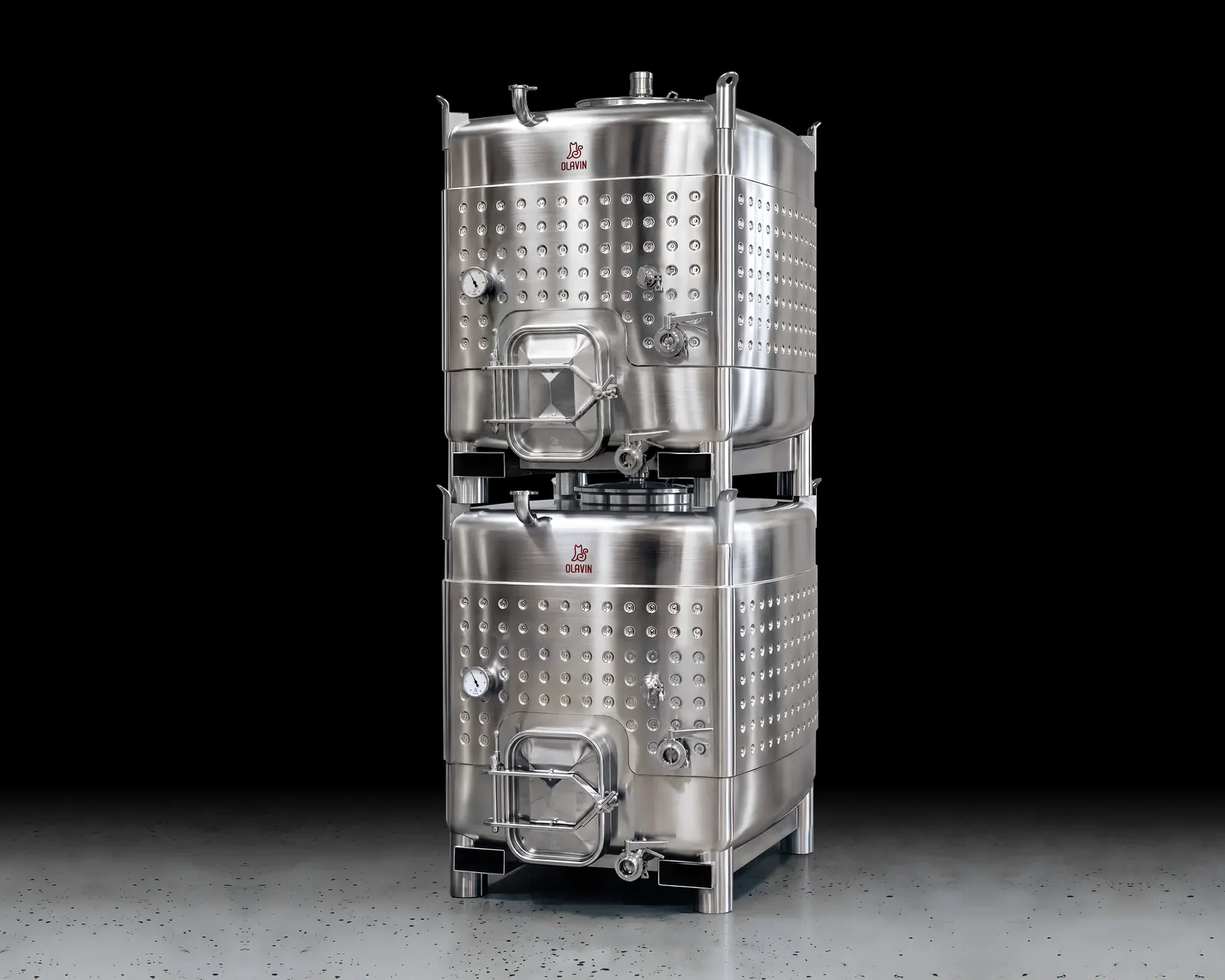
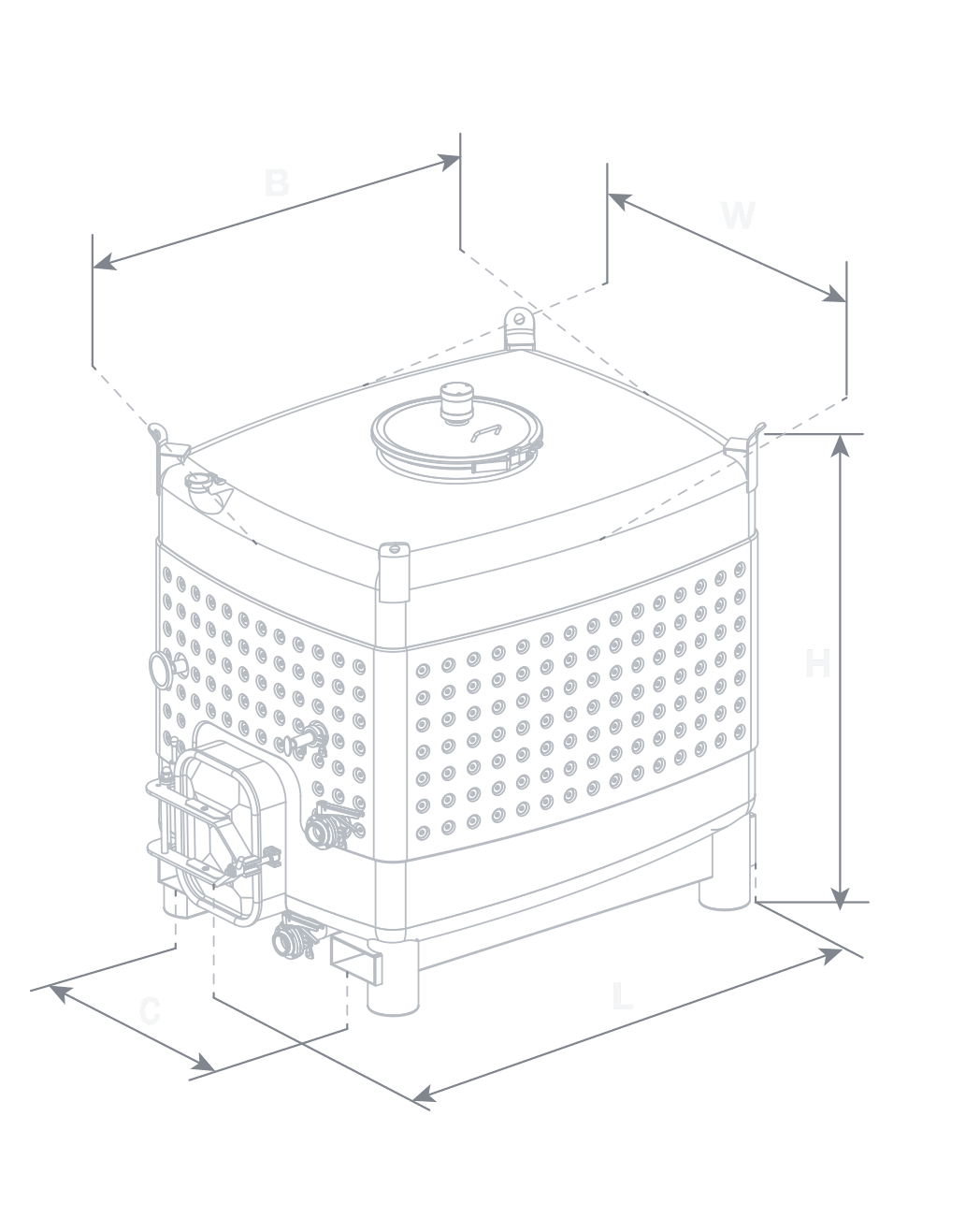
Classic sizes are listed here. Every dimension is finalized around the cellar it is going into.
| Size | W (in) | B (in) | C (in) | L (in) | H (in) |
|---|---|---|---|---|---|
| 250 gal | 45 | 54 | 28 | 65 | 44 |
| 350 gal | 45 | 54 | 28 | 65 | 54 |
| 400 gal | 45 | 54 | 28 | 65 | 58 |
| 450 gal | 45 | 54 | 28 | 65 | 68 |
| 580 gal | 45 | 54 | 28 | 65 | 79 |
| Size | W (mm) | B (mm) | C (mm) | L (mm) | H (mm) |
|---|---|---|---|---|---|
| 1.0 kL | 1,130 | 1,370 | 715 | 1,650 | 1,115 |
| 1.2 kL | 1,130 | 1,370 | 715 | 1,650 | 1,255 |
| 1.5 kL | 1,130 | 1,370 | 715 | 1,650 | 1,470 |
| 2.0 kL | 1,130 | 1,370 | 715 | 1,650 | 1,855 |
| 2.2 kL | 1,130 | 1,370 | 715 | 1,650 | 2,005 |
B and W are the tank body; L is the overall length including fittings and overhang, and C the fork-pocket centres. Height sets capacity on the shared footprint. The sizes most cellars ask for are listed here; any capacity between 1.0 and 2.2 kL is built to order.
Planning Guide
Inside the guide:
Square Tank Series
The Olavin Mini Tanker is the mobile member of the Square Tank Series — the same family logic of space and order, at small-lot scale.
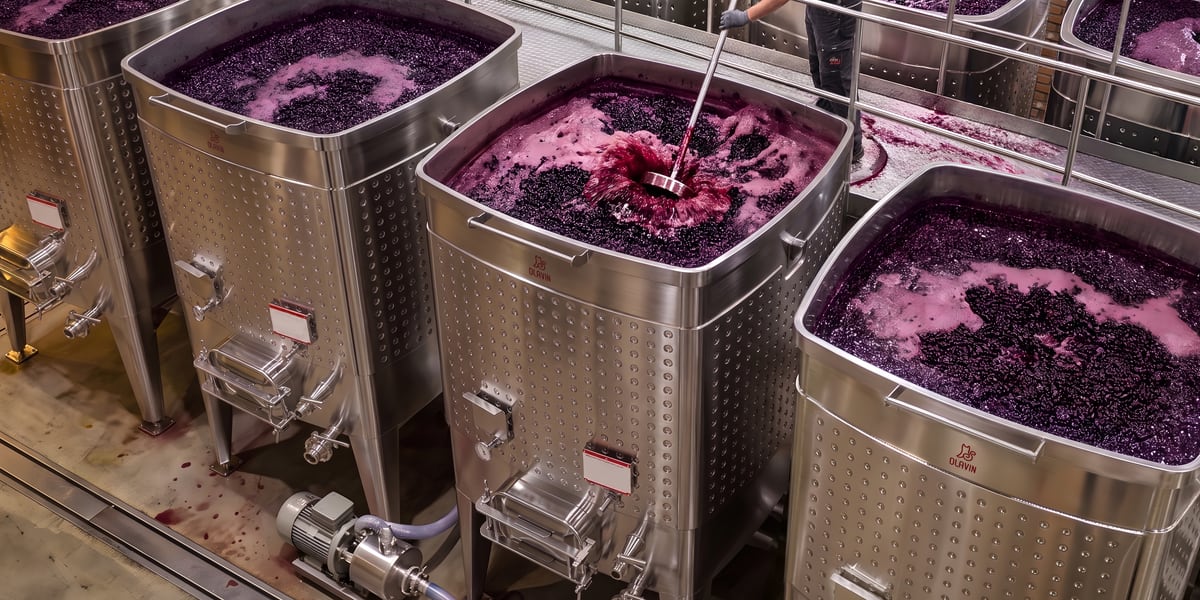
Open-top access, without giving up the floor.
View product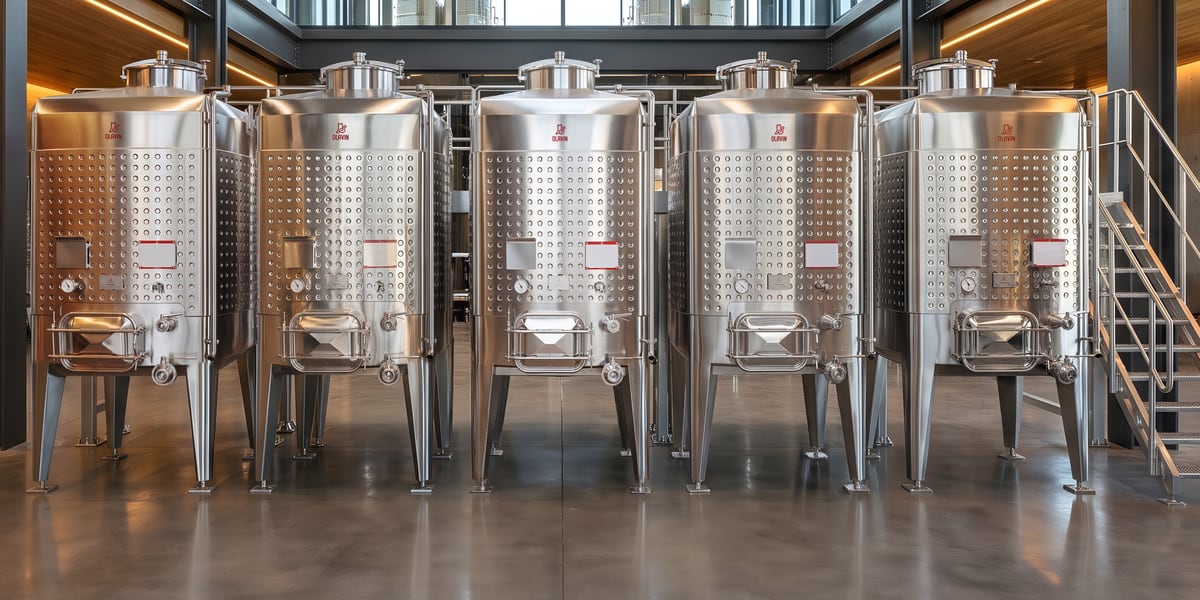
Diamond-Faceted—a New Presence in the Cellar.
View product
The world's first 5-year warranty on a square VC fermenter.
View product