Systems

Methods, engineering logic, and cellar systems.

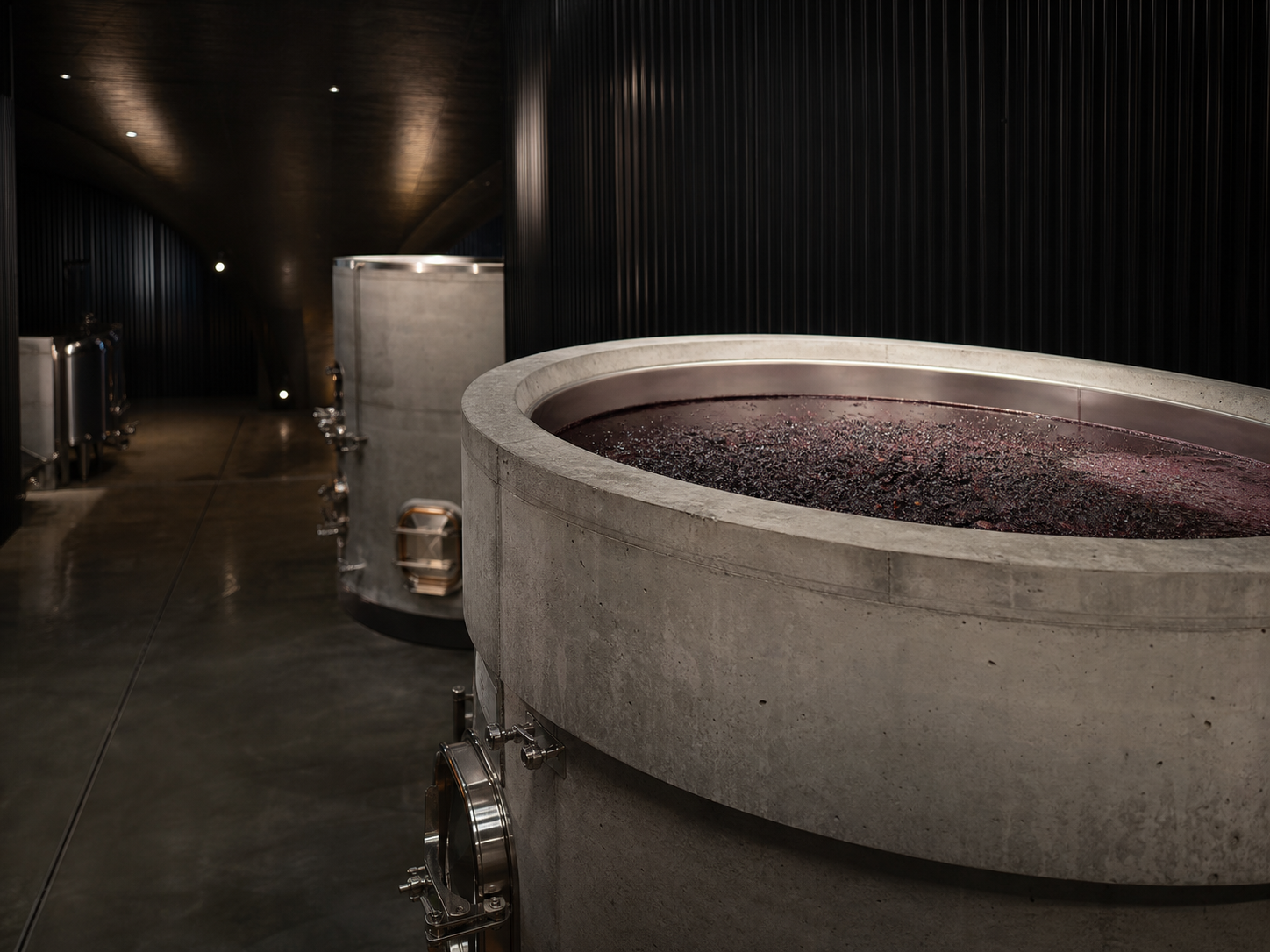
Systems are where winemaking intent becomes production behavior, spatial planning, and equipment roles.

Architecture Workflow Material
System Logic

Cellar Integration Systems

Make equipment belong inside the architecture of the winery.

Constraint
A cellar can lose value when equipment, circulation, and visitor experience are planned separately.
Engineering Response
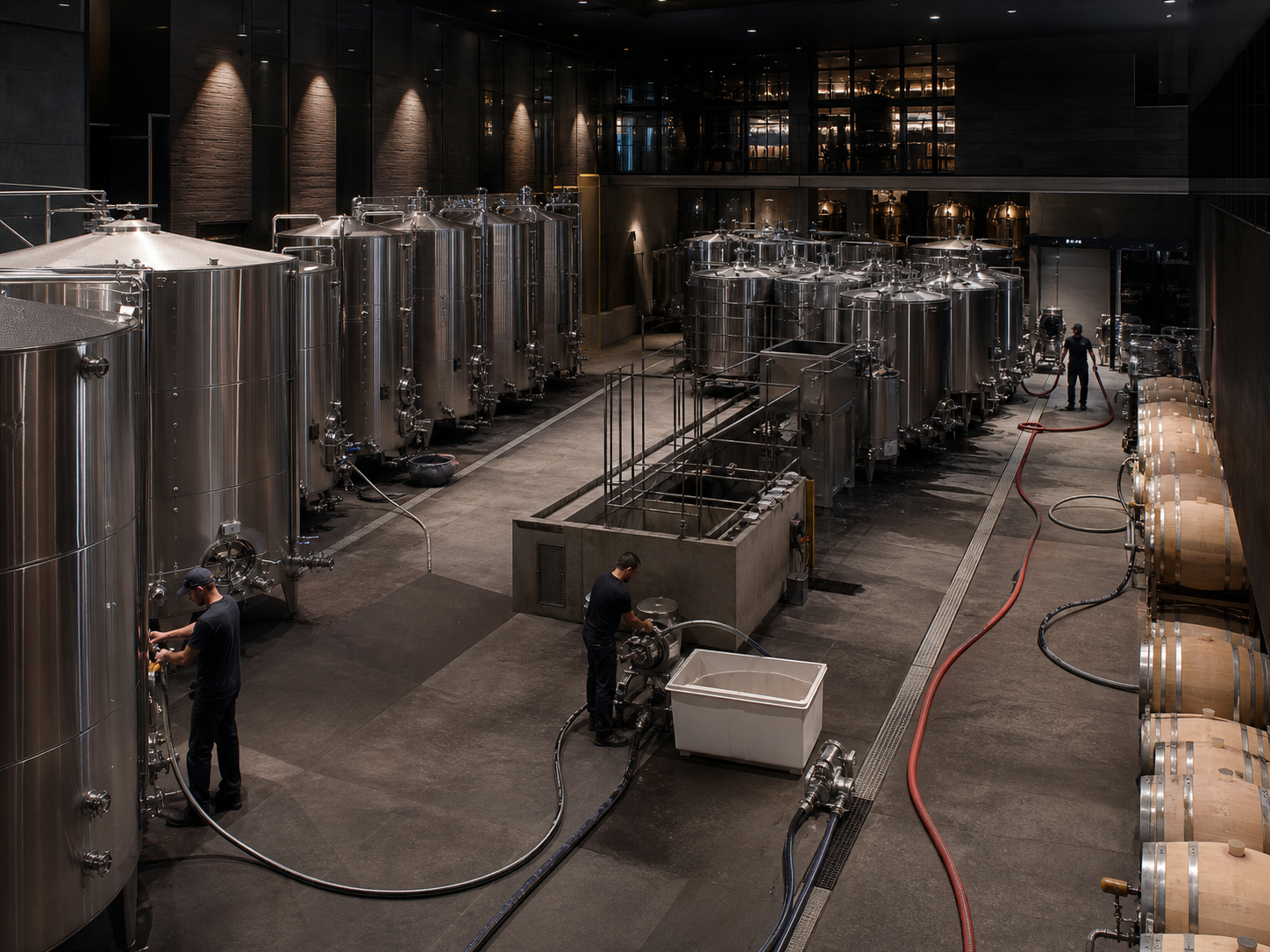
Coordinate tanks, catwalks, piping, access, lighting, and movement as a spatial production system.
  • Better space efficiency
  • More coherent operations
  • Stronger cellar presentation
System Logic

Everseal System

Extend the role of open-top equipment while maintaining confidence in the cellar.

Constraint
Open-top vessels and sealed tanks are often treated as separate equipment roles.
Engineering Response
Create a stable sealing boundary so the same physical equipment can support more than one cellar role.
  • More flexible vessel roles
  • Better equipment utilization
  • Reduced role fragmentation
System Logic

Fermentation Systems

Support controlled fermentation environments while preserving winemaking judgment.

Constraint
Standalone tanks cannot solve fermentation quality without access, cleaning, temperature, and workflow logic.
Engineering Response
Define fermentation as a system of vessel geometry, control points, operator access, and cellar movement.
  • Stable fermentation conditions
  • Better operator confidence
  • Clearer process decisions
System Logic

Process & Transfer Systems

Reduce friction between production steps and protect process clarity.

Constraint
Transfer and handling often become hidden sources of labor, risk, and spatial conflict.
Engineering Response
Treat movement, interfaces, and access as part of the production system.
  • Cleaner cellar flow
  • Reduced handling risk
  • Faster process transitions
System Logic

Thermal Control Systems

Create dependable temperature behavior for fermentation, holding, and production rhythm.

Constraint
Temperature control loses value when it is isolated from tank use, access, and operational timing.
Engineering Response
Integrate thermal interfaces with vessel role, cellar routing, and process requirements.
  • Reliable thermal behavior
  • Better process timing
  • Reduced operational strain