
Daily judgement
Every check is useful. Too many checks become the process.
Access matters because judgement matters. But when the cellar only feels safe through constant manual attention, minimal intervention becomes vigilance under another name.
Winemaking
You want to step back — without leaving the wine unprotected.
The real pressure
You do not choose minimal intervention because you want less attention. You choose it because you want the wine to keep more of what made it worth protecting in the first place.
But every unnecessary correction feels like a small admission that the cellar could not hold the conditions long enough. Every extra check can feel necessary and intrusive at the same time.
Minimal intervention is not the absence of a system. It is the ability to step back without leaving the wine exposed.
Cellar pressure
Daily judgement
Access matters because judgement matters. But when the cellar only feels safe through constant manual attention, minimal intervention becomes vigilance under another name.
Protected openness
Expression needs room, but exposure cannot be the price of that expression. The cellar has to support openness while still protecting the wine from instability, oxidation risk, and forced correction.
Stable expression
Temperature behavior, access, and protected conditions must work together so the wine is not pushed back into intervention simply because the cellar cannot remain calm.
Olavin response
The response is not to add more intervention. It is to create conditions where less intervention remains safe, deliberate, and technically defensible.
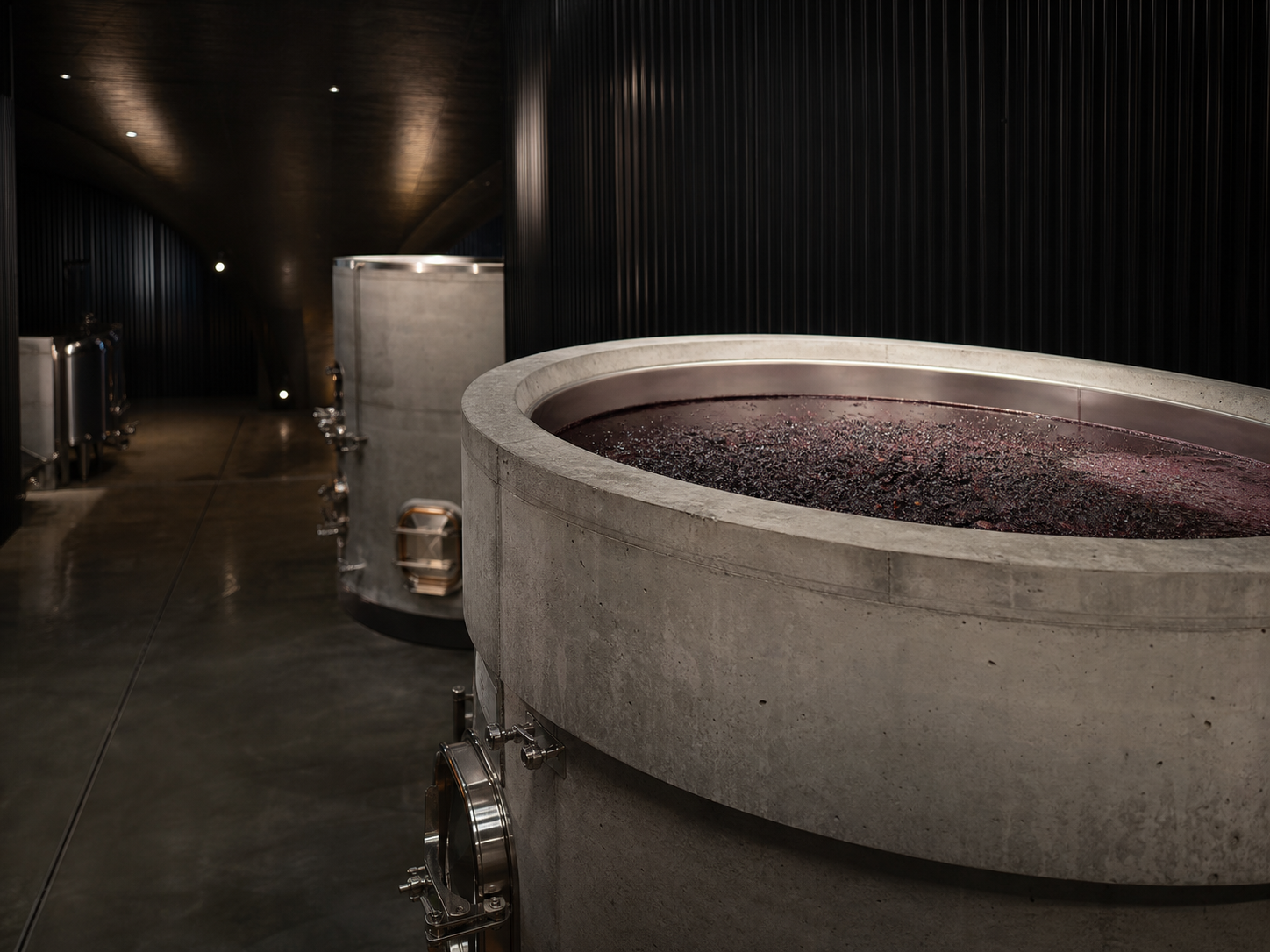
Everseal™ creates a stable sealing boundary for Olavin open-top equipment, allowing expression, access, and protection to be considered together instead of forcing a choice between openness and exposure.
Explore Everseal™ System →Tank behavior, access, handling, and cellar rhythm are planned so the winemaker can guide the wine without making repeated checks the only form of protection.
Explore Fermentation Systems →Temperature response is designed to stay calm enough that expression is not pushed back into intervention simply because the cellar cannot hold its boundary.
Explore Thermal Control Systems →Decision context
The winery is not choosing between philosophy and control. It is deciding whether the cellar can create protected conditions where a lighter hand remains practical.