
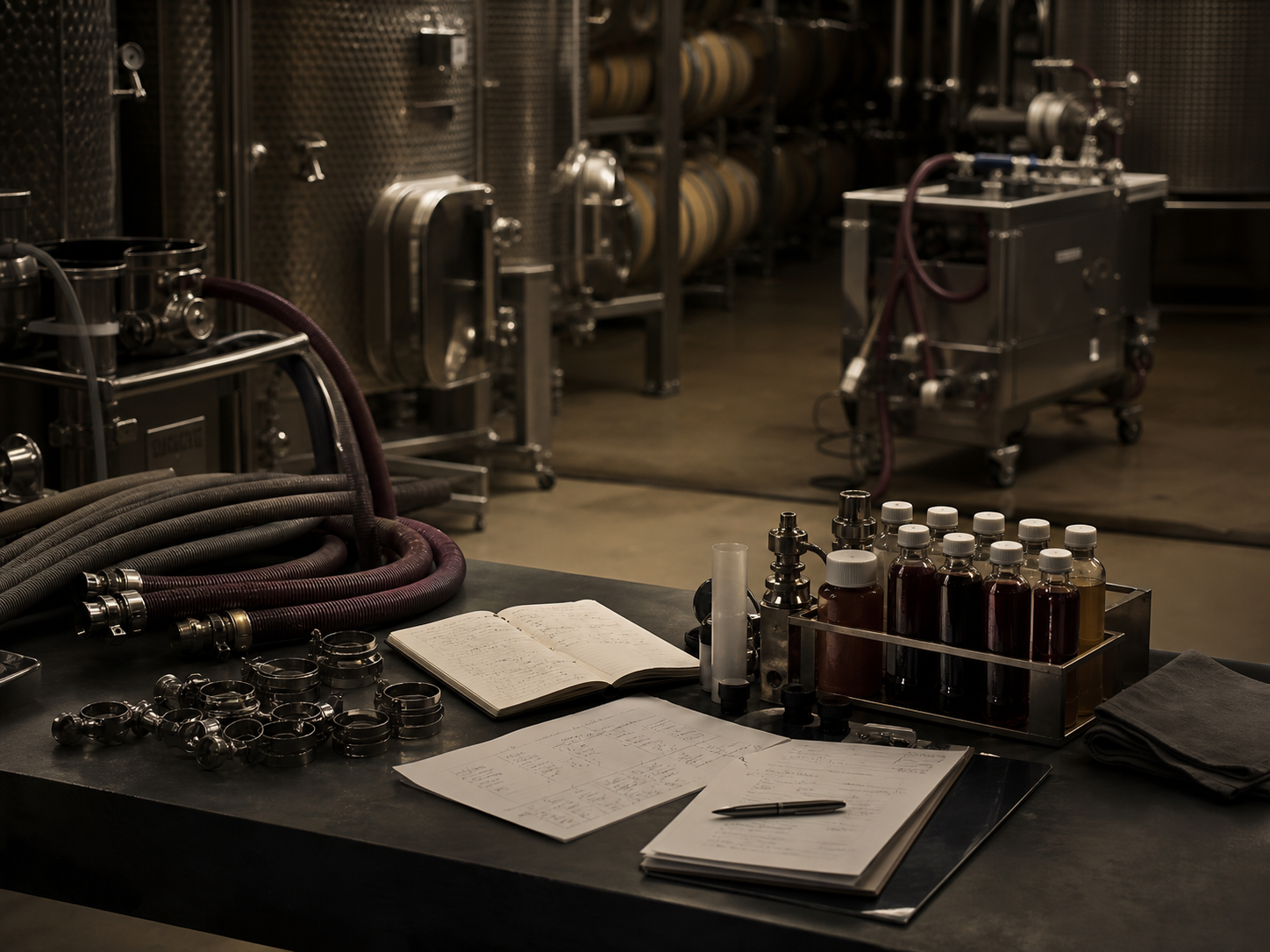
Winery cellar prepared for variable harvest volume and changing tank roles.

Winemaking

Every vintage is different. Your cellar isn’t.

You want flexibility — without locking your cellar into fixed capacity.

The real pressure

The problem is not that harvest changes. It is that the cellar was built around one version of it.

You do not plan flexibility because you expect every detail to change. You plan it because the important details always change first: fruit condition, arrival timing, lot size, cellar labor, and the direction the winery wants to grow next.

The pressure is not only operational. It is strategic. A cellar built around one assumption can make the next vintage feel like a compromise before the wine has even entered the tank.

Flexibility is not spare capacity. It is the ability to keep winemaking options open when the cellar is under pressure.

Cellar pressure

Where fixed configuration starts to hurt

01

Vintage variation

This year does not behave like last year.

Harvest can change volume, timing, and fruit condition before the cellar has time to negotiate. The useful question is whether the tank environment can absorb variation without forcing the wine into the wrong role.

02

Small-lot planning

Small lots can create the hardest planning pressure.

A few small lots can create more decisions than one large batch: different picking windows, different access needs, different moments of attention. The issue is not only how many tanks are available, but whether the fermentation setup supports that rhythm.

03

Future cellar configuration

A cellar built for one assumption can become the constraint.

The owner or general manager is not only planning this harvest. They are deciding how much change the cellar can tolerate over the next years: expansion, new wine styles, labor flow, equipment position, and the way people move through the space.

Olavin response

How Olavin keeps options open

The response is not simply more equipment. It is smarter role flexibility, clearer fermentation rhythm, and cellar planning that preserves future options.

Capability

Everseal™ System

Multi-role open-top capacity.

Everseal™ allows Olavin open-top equipment to support a more flexible role in the cellar, helping wineries rethink the traditional separation between open fermentation and protected holding.

Explore Everseal™ System →
Capability

Fermentation Systems

Small-lot rhythm and adaptable access.

Fermentation setup is designed around changing lots, different access moments, and daily cellar rhythm so flexibility does not become a manual reset every time the vintage shifts.

Explore Fermentation Systems →
Capability

Cellar Integration Systems

Layout and expansion logic.

Equipment position, movement, future expansion, and cellar use are planned together so the winery is not locked into a single harvest assumption.

Explore Cellar Integration Systems →

Owner lens

Flexibility is capital optionality.

The question is not whether the winery should buy more equipment. The question is whether today’s equipment decision preserves future options without overbuilding around a single harvest assumption.

Decision context

The decision underneath flexibility

The winery is not choosing spare capacity for its own sake. It is deciding whether the cellar can keep winemaking options open when the next vintage refuses to follow the plan.